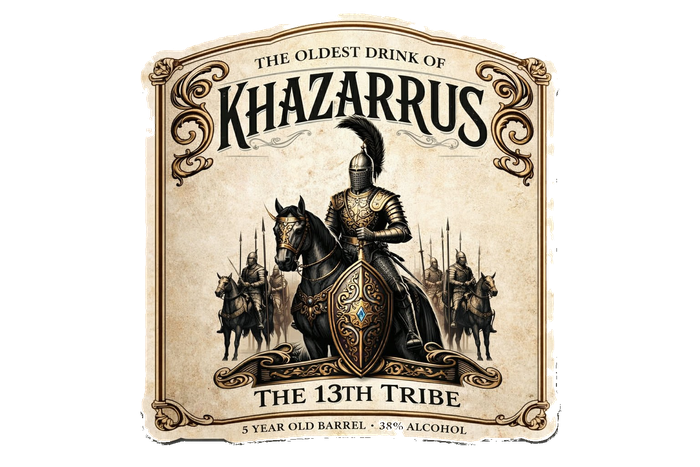
Welcome to an ancient tradition.
This website contains content about premium spirits.
Please confirm your age to enter.
This website contains content about premium spirits.
Please confirm your age to enter.
Khazzarus — Est. VII Century · Eurasia
A brandy born from the crossroads of empires
Discover KhazzarusThe Khazars were not merely a people — they were a force that shaped the world between the Orient and Europe. Born of the great Turkic peoples in the endless steppes of Eurasia, they built a state that endured where empires crumbled, a civilisation whose refinement matched their ferocity.
Masters of the Silk Road, guardians of the Caspian passage — they presided over exchanges of gold, furs, spices, and the most noble wines from Georgia, Armenia, and Azerbaijan. Their elites commanded both the battlefield and the banquet with equal authority.
Photo: Ömer Faruk Bener · Pexels
"They were keepers of secrets — some bound to fire, to transformation… and to what would become Khazzarus."— Chronicles of the Steppe, VIII Century
Centuries of craft, distilled into a single moment.
The oldest drink of the 13th Tribe.
5 Year Old Barrel · 38% Alcohol.
A 7th-century Sasanian Shah, when asked which rulers he considered his equals, named only three: the Emperor of China, the Emperor of Byzantium — and the Khagan of the Khazars. This was not flattery. It was the diplomatic record of the ancient world.
From their capital Itil, where the Volga meets the Caspian, they held the only passage between the Arab Caliphate and Christian Europe for over a century. When Byzantine Emperor Constantine V sought the most powerful alliance in the known world, he offered his son in marriage to a Khazar princess. They were not a footnote in history. They were its axis.
In the summer of 652 AD, the Arab general Abd ar-Rahman ibn Rabiah marched north with an army that had already conquered Persia and swept across the Middle East. Outside the Khazar capital of Balanjar, that advance stopped. The Khazars defeated him in open battle — the first time the northward spread of Islam had been halted. The line they drew that day held for a century.
In 730, Khazar prince Barjik led his cavalry deep into the Arab heartland, defeated the Umayyad army at the Battle of Ardabil, and killed the Arab governor al-Jarrah al-Hakami on the field. It was one of the most audacious military strikes of the medieval world — a nomadic steppe people striking at the heart of the greatest empire on earth, and winning.
Pressed between the Christian cross and the Islamic crescent, the Khazar royal court made a decision without precedent: they converted to Judaism — a third path — refusing allegiance to either empire. It was not religion. It was sovereignty. Khazzarus carries the same refusal to be defined by the world around it.
In the fortified citadel of Cuzdrioara, the traces of a lost civilization conceal a legend sealed in fire and mystery. It is said that the 13th warrior tribe, the Khazars, crafted a rare distillate where matter becomes spirit.
After centuries of silence, Khazzarus was not discovered — it was awakened.
The oak taught it patience. Time made it complete. Our master blender works with the ancient wine traditions of Georgia, Armenia and Azerbaijan — three sources that have remembered the first taste of fermentation for millennia.
Georgian and Armenian vine — thousands of years of memory
The warrior's first campaign — sharp, direct, uncompromising
The alchemist's fire and the Silk Road's most precious cargo
The barrel's patience — four centuries of transformation
Slow fire, slow gold — the sweetness only time can build
The warrior. The oath. The abandoned fortress.
The court at Itil — refinement in the shadow of power
The Battle of Ardabil, 730 AD — fire that changed history
Caravans through the Caspian Gate — amber, silk, and devotion
The height of Khazar power — bold, commanding, irreducible
The empire falls silent — only the land remembers
Extraordinarily long — the echo of a fire that never went out
Khazzarus is crafted in the tradition of the ancient Caucasian masters — a discipline of restraint, observation, and reverence for the raw material.
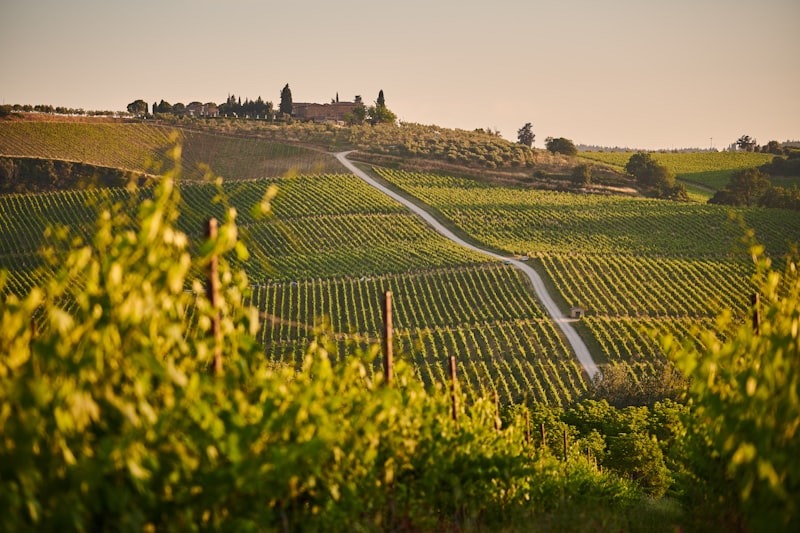
Heirloom grape varieties of the South Caucasus — cultivated in mineral-rich volcanic soils at altitude, harvested by hand at precise ripeness.
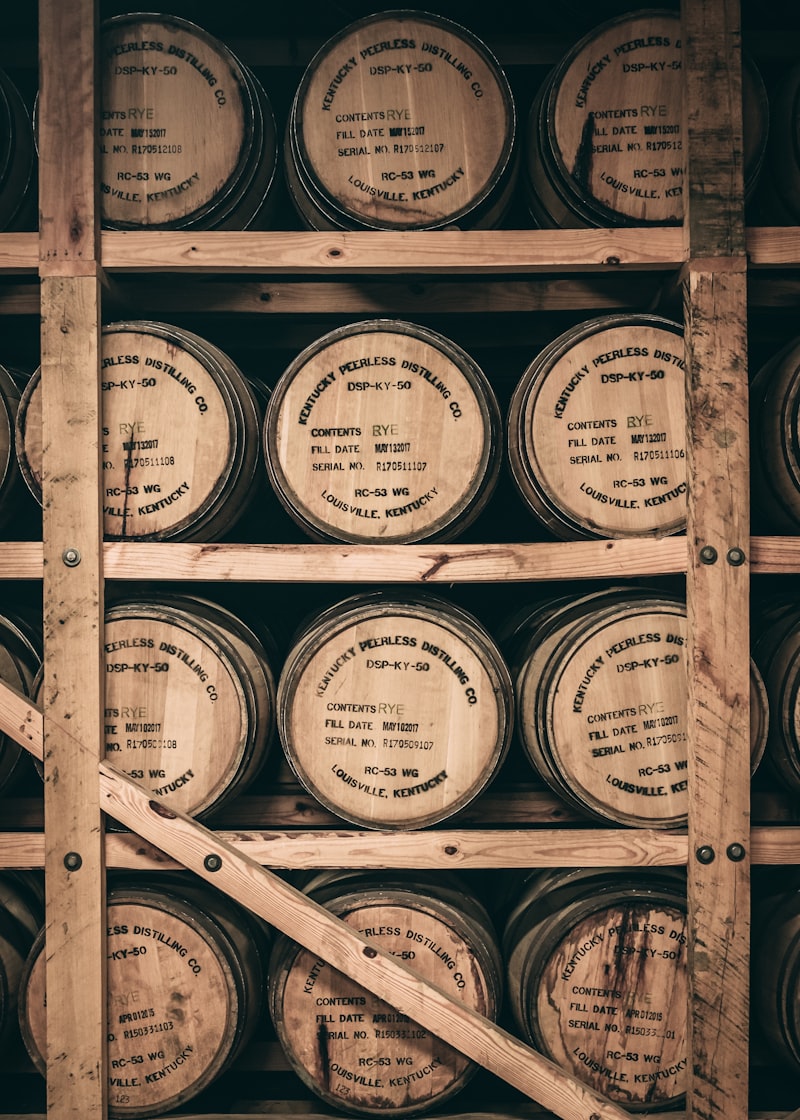
Hand-selected Limousin oak casks, left undisturbed. Time — measured in decades, not years — is the master craftsman. The silence is absolute.
Assessed by the Maître de Chai — a title passed through an unbroken lineage. Bottled at natural strength. Sealed by hand with burgundy wax bearing the mark of the 13th Tribe. Numbered in sequence. Released when ready, and not a day before.
In the fortified citadel of Cuzdrioara, Romania, a legend was sealed for centuries. Today, Khazzarus travels where the Khazars once marched — across the great cities of Europe, claimed by those who recognise something ancient in every glass.
This is not a spirit for every occasion. It is a spirit for the moment you decide to stop accepting the ordinary. 5 year old barrel. 38% pure. Born in the citadel of Cuzdrioara. Awakened for those who deserve it.
Limited allocation per market · Direct orders only · Worldwide shipping available
There is an ancient custom among men of consequence: when the battle is won, when the decision is made, when the silence finally earns its weight — one pours Khazzarus, lights a fine cigar, and allows time to pass without apology.
The earthy depth of a well-aged cigar — its cedar, its leather, its slow combustion — finds in Khazzarus an equal. Each amplifies the other. Together, they are not an indulgence. They are a philosophy.
Khazzarus pairs exceptionally with full-bodied cigars from Honduras, Nicaragua, or the Dominican Republic. Recommended: any Maduro wrapper with a slow, cool draw.
Experience the Ritual